

Buying your first home is an exciting life milestone but it can be a little overwhelming. From calculating deposit requirements and comparing mortgage deals to deciding whether to submit an offer, there are a lot of new processes to work through.
However, the first step will usually be to obtain a mortgage Agreement in Principle. This article explains what a mortgage Agreement in Principle is, the benefits of getting one and how to apply for one.
What is a mortgage Agreement in Principle?
A mortgage Agreement in Principle (AIP) involves being assessed by a lender to find out how much they may be willing to lend to you to purchase your property. The lender will review details such as income, credit history, debts and deposit funds to provide an informal borrowing amount. A mortgage Agreement in Principle is often described as a Mortgage in Principle (MIP) or Decision in Principle (DIP), and it is not a confirmed mortgage, but it does give buyers a better idea of how much they are likely to be able to borrow.
The average house price was £228,218 for first-time buyers in the UK in December 2025 but average prices vary across regions. 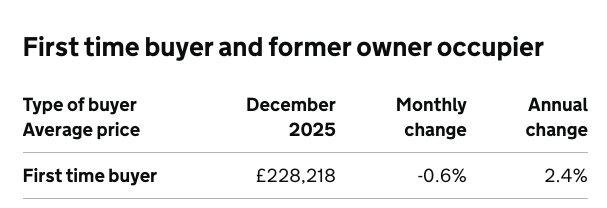
Source: UK House Price Index December 2025
For example, in central London prices are higher, with an average first-time buyer house price in Westminster of £818,000, based on ONS data from January 2026.

Source: ons.gov.uk
Meanwhile, Newcastle upon Tyne’s average price for first-time buyers was £182,000.

Source: ons.gov.uk
Why first-time buyers should consider an Agreement in Principle
There are several benefits to obtaining an AIP if you’re a first-time buyer, including gaining a clearer idea of how much you can borrow to ensure that your property search is within your affordable range.
Having a Mortgage in Principle also shows estate agents and sellers that you are a serious buyer who is likely to be approved for a mortgage to buy a property.
What documents are required?
To obtain a Decision in Principle, no documents are required but if you then want to go ahead with a mortgage application, lenders will usually require the following documents:
- Recent payslips or other proof of income
- Bank statements (3-6 months)
- Proof of ID such as a passport or driving licence
- Evidence of deposit funds
- Details of any outstanding debts/loan agreements